
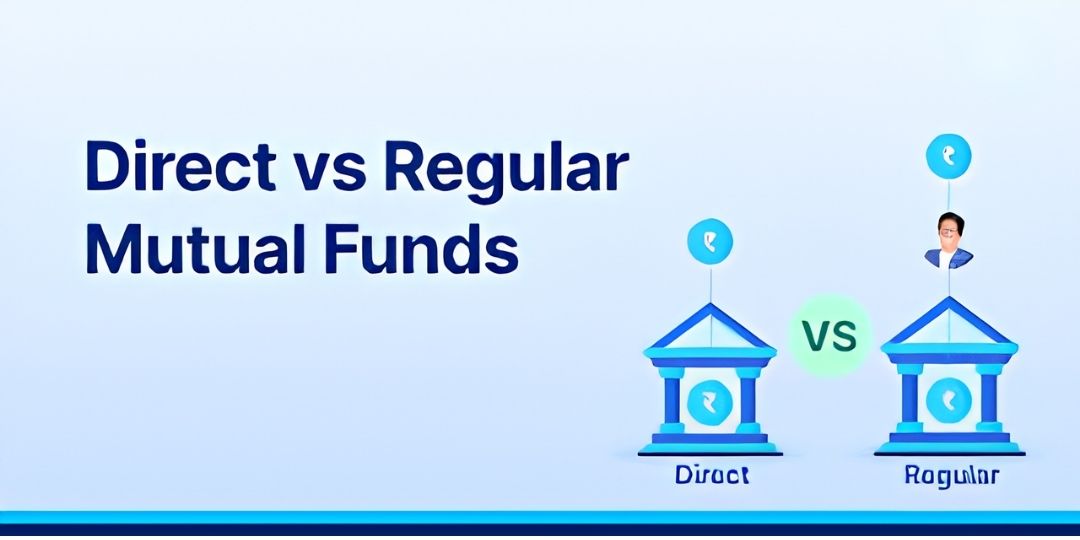
Direct vs Regular Mutual Fund Plans (2026)
Reviewed by Kanishk Devbangia, NISM V-A Certified MF Distributor ARN-315144
Last Updated: June 2026
When investors first discover that a mutual fund scheme comes in both a direct plan and a regular plan, the immediate reaction is usually confusion. "Why does the same fund have two versions?", "Why is one NAV higher than the other?", "Am I investing in a different portfolio?"
The truth is that direct and regular plans invest in the exact same underlying portfolio. They are managed by the same fund manager, follow the same investment objective, and carry the same risks. The difference lies in how you access the fund and what you pay for that access.
Before we begin, I want to be completely transparent. Gayatri Financial Services is an AMFI-registered mutual fund distributor, and we earn trail commissions on regular plans. That does not mean direct plans are bad, nor does it mean regular plans are always the right choice. The purpose of this article is to explain both options honestly so you can make an informed decision based on your own preferences and investing style. Let's start with the basics.
1. What Are Direct and Regular Mutual Funds Plans?
Back in 2013, SEBI introduced a rule requiring every mutual fund scheme to offer two versions of itself: a direct plan and a regular plan. Both versions invest in the same securities.
If a fund owns shares of HDFC Bank, Reliance Industries, and Infosys, both the direct and regular plans own those exact same stocks in the same proportions. The fund manager making investment decisions is also the same. The difference is in the route through which you invest.
A regular plan is purchased through a distributor, bank, wealth manager, or advisory platform. Since an intermediary is involved, the mutual fund company pays a commission to that intermediary for bringing and servicing the investment.
A direct plan removes the intermediary entirely. You invest directly with the Asset Management Company (AMC) or through a platform that offers direct investing without distributor commissions. Because there is no commission to pay, the direct plan costs less.
Lesson: Direct and regular plans are not different mutual funds. They are simply two different ways of accessing the same mutual fund.
2. The Real Difference: Expense Ratio
If you remember only one thing from this article, remember this: the entire difference between direct and regular plans comes down to the expense ratio.
An expense ratio is the annual fee charged by a mutual fund to manage and operate the scheme. This fee covers portfolio management, administration, record keeping, compliance, registrar costs, and other operational expenses.
In a regular plan, the expense ratio also includes the distributor commission. In a direct plan, that commission component is absent. Everything else remains largely the same. As a result, direct plans always have a lower expense ratio than the regular version of the same scheme.
The gap varies across categories. In many equity funds, the difference can be significant. In debt funds, the difference is often smaller but still exists. This may not sound like a major issue initially. After all, what difference does a fraction of a percent make? The answer becomes clear when you look at how costs affect returns over long periods.
Lesson: The lower cost of a direct plan comes entirely from the absence of distributor commission.
3. Why Does the Direct Plan Have a Higher NAV?
Many investors compare the NAV of a direct plan and a regular plan and immediately assume the direct plan is somehow performing better. That is not exactly what's happening.
Mutual fund expenses are deducted from the scheme's assets on a daily basis. Since direct plans have lower expenses, less money is deducted each day. Over time, this allows the direct plan's NAV to gradually move ahead of the regular plan's NAV. The portfolio itself is identical. The performance before expenses is identical. The difference arises only because one version carries lower ongoing costs.
Think of two buckets being filled with water at the same rate. If one bucket has a slightly larger hole at the bottom, it will accumulate less water over time. The regular plan is simply the bucket with the slightly larger hole. This is why direct plans usually show higher NAVs than their regular counterparts.
Lesson: A higher NAV in a direct plan reflects lower costs, not a different investment strategy or superior stock selection.
4. What Are You Paying for in a Regular Plans
It is easy to say that direct plans are cheaper. The more important question is whether the additional cost of a regular plan provides value. For many investors, the answer can be yes.
A good distributor or advisor may help with onboarding, KYC completion, portfolio reviews, asset allocation, SIP setup, goal planning, tax-related discussions, and ongoing support. Perhaps even more importantly, they can help investors avoid emotional mistakes. Many people panic during market crashes, stop SIPs at the wrong time, or chase performance after a rally. A competent advisor can often prevent these costly decisions.
Of course, not every investor requires this support. Some investors enjoy researching funds themselves. They are comfortable navigating AMC websites, comparing schemes, reviewing portfolios, and making investment decisions independently. For such investors, paying an additional commission may not make sense. This is why there is no universal winner in the direct-versus-regular debate. The best choice depends on how much guidance you genuinely need.
Lesson: The extra cost of a regular plan pays for advice, service, and support. Whether that is worth paying for depends on the investor.
5. How Small Cost Differences Become Big Money
One of the most powerful forces in investing is compounding. Unfortunately, costs compound too. Let's use a simple illustration.
Suppose two investors each invest ₹10 lakh in the same hypothetical equity fund and stay invested for 20 years.
Investor A chooses the regular plan with an expense ratio of 1.5%.
Investor B chooses the direct plan with an expense ratio of 0.8%.
Assume the portfolio generates the same gross annual return of 11% before expenses.
Because Investor B pays lower ongoing costs, a larger portion of the return remains invested every year. The difference may appear small in year one.
By year ten, it becomes noticeable. By year twenty, it can translate into several lakh rupees of additional wealth.
This example is purely illustrative. Actual returns and expense ratios vary across schemes and over time.
The point is not the exact numbers. The point is understanding that even small annual cost differences can become meaningful when compounded over long periods. At the same time, cost is only one side of the equation. If professional guidance helps an investor stay disciplined and avoid major mistakes, that value can sometimes outweigh the additional fee.
Lesson: Costs compound over time. Even seemingly small differences deserve attention when investing for decades.
6. How to Check Whether You Hold a Direct or Regular Plan
Many investors do not know which version they own. Three quick checks settle it.
Check the scheme name. Plan-level statements usually spell it out. The scheme name will contain the word “Direct” for a direct plan. If it says “Regular” or carries no “Direct” tag, it is almost always the regular plan.
Check your Consolidated Account Statement (CAS). The CAS from the registrars lists every holding with its full plan name, making the direct-or-regular label explicit for each scheme.
Check how you invested. If you bought through a distributor, bank, or advisory platform, you are in a regular plan. If you transacted directly on the AMC’s own site or a recognised direct portal with no intermediary, you are in a direct plan.
Lesson: The easiest way to identify your plan type is by checking the scheme name on your statement.
7. Can You Switch Between Direct and Regular Plans?
Yes, you can. However, switching is not always as straightforward as people assume. In most cases, moving from a regular plan to a direct plan is treated as a redemption from one plan and a fresh purchase into another. This can have tax implications.
It may also trigger an exit load if you are still within the applicable holding period. Because of this, investors should not switch solely because they hear that direct plans are cheaper. Instead, compare the potential long-term savings against any immediate tax liability or exit load costs. The decision should be based on actual numbers rather than assumptions.
Lesson: Switching plans can trigger taxes and exit loads, so evaluate the overall impact before making the move.
Frequently Asked Questions
Q1. Do direct plans generate higher returns?
Since expenses are lower, investors keep slightly more of the portfolio's return. However, whether that translates into a better overall investing experience depends on the investor's need for guidance and support.
Q2. Why do AMCs offer both direct and regular plans?
Because investors have different needs. Some prefer a self-service investing experience, while others value professional advice and ongoing assistance.
Q3. Why do regular plans cost more?
Regular plans include distributor commissions within their expense ratios. These commissions compensate distributors and advisors for their services and support.
Q4. Can I switch from a regular plan to a direct plan later?
Yes. However, such a switch is usually treated as a redemption and fresh purchase, which may trigger taxes and exit loads.
Disclaimer:
This is written for educational and informational purposes only. Nothing here constitutes investment advice or a recommendation to buy or sell securities. All data is sourced from publicly available information. Investments in securities markets are subject to market risks — please read all offer documents carefully before investing